
Rethinking district energy: What Sugar Valley can teach project developers
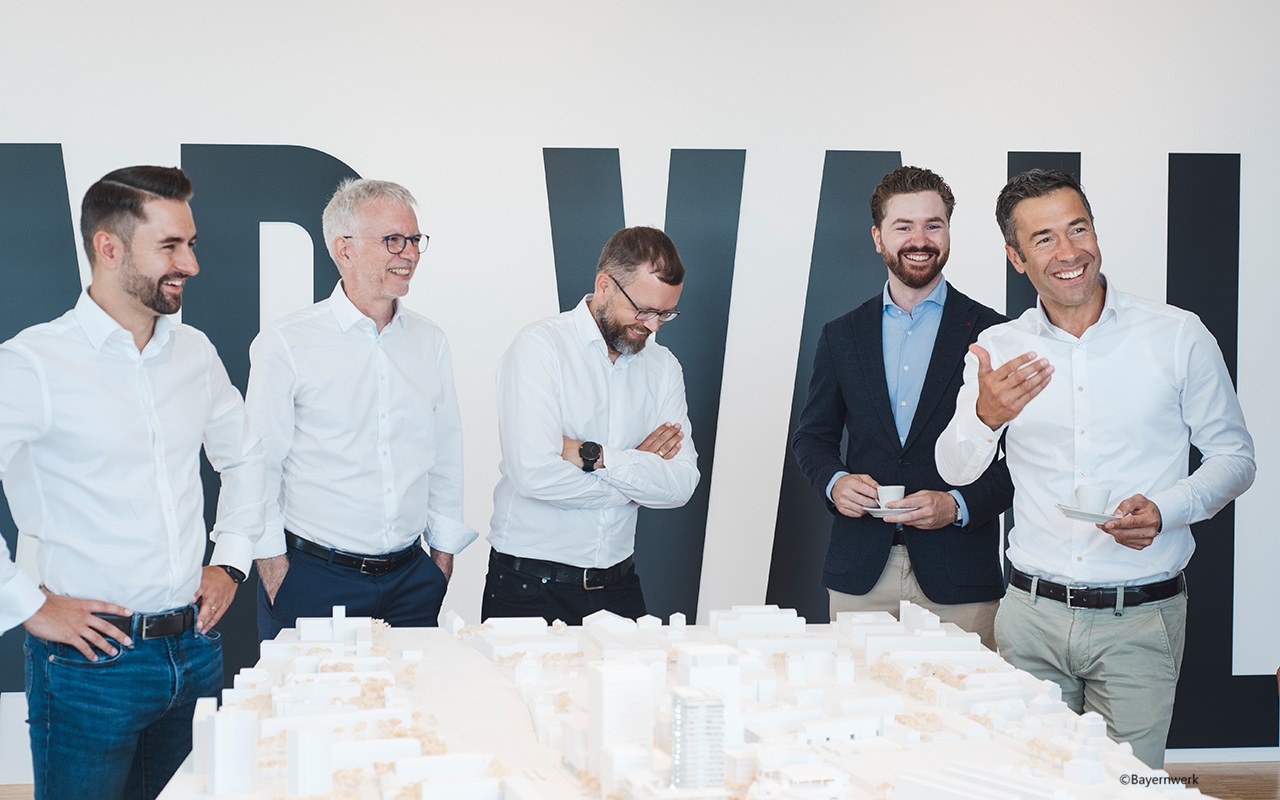
With the signing of the energy contracting agreement, Salvis Consulting AG and Bayernwerk Natur GmbH have reached an important milestone in the implementation of the Sugar Valley district in Munich-Obersendling. The contract paves the way for the realization of the district energy network and its long-term energy supply.The energy concept forms a key component of Salvis’ comprehensive sustainability strategy for approximately 160,000 square meters of mixed-use rental space. It has been designed to achieve carbon neutrality while providing long-term economic reliability for future occupants and investors.Alpha IC has been supporting the Sugar Valley development team since an early project phase. Initially, Alpha IC helped shape the contracting model and advised Salvis throughout its implementation. Subsequently, Alpha IC's sustainability experts successfully supported the project in achieving Germany's first LEED Platinum Neighborhood Development (ND) v4 certification for a district development.
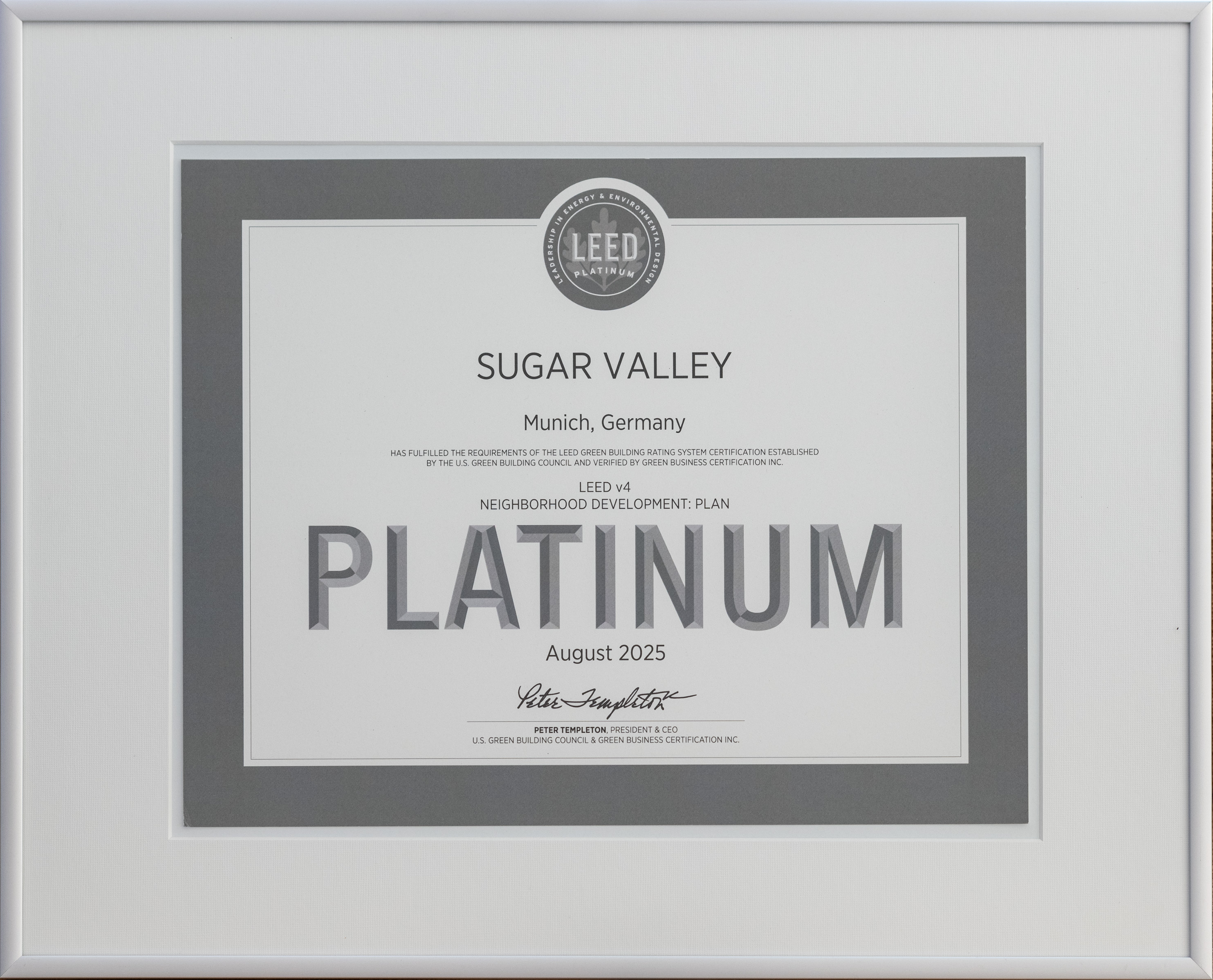
Zunächst hat Alpha IC das Contracting-Modell mitentwickelt und Salvis zu dessen Umsetzung beraten. In einem weiteren Schritt haben die Nachhaltigkeitsexpert:innen der Alpha IC die deutschlandweit erste LEED Platin-Zertifizierung Neighborhood Development (ND) v4 für eine Quartiersentwicklung erfolgreich beraten.
This article focuses on the district's innovative energy concept. In an interview, Matthias Domke, Partner and expert in commissioning management, energy optimization and energy contracting at Alpha IC, explains why the project offers valuable insights for project developers. Sugar Valley demonstrates how carbon neutrality, security of supply, operational requirements and economic viability can be integrated from the earliest stages of development.
What makes the Sugar Valley energy concept unique?
Matthias Domke:
The key factor is connectivity.
All buildings within the district are linked through a shared low-temperature energy network. This allows energy to be transferred to where it is needed most at any given time. Waste heat generated in one building, for example from cooling processes, can be used elsewhere for heating or domestic hot water.
What makes this approach particularly effective is the district's mixed-use structure. Residential, office, retail and commercial buildings each have different load profiles. This diversity creates opportunities to use available energy more efficiently. Instead of generating and discarding heat or cooling energy separately, it remains within the system and can be utilized where required.
What role do heat pumps and renewable electricity play?
Matthias Domke:
Heat pumps are the core technological element of the concept, providing both heating and cooling. Decentralized heat pumps operate within the buildings, complemented by a central energy hub serving the district.
The system functions without local combustion processes. Electricity is the primary energy source. A significant share is intended to come from on-site photovoltaic generation, while additional electricity will be sourced through long-term agreements for renewable energy.
The benefits extend beyond carbon reduction. Such an approach can also provide greater predictability and price stability for tenants and users by reducing dependence on volatile fossil fuel and energy markets.
What was Alpha IC's role in the project?
Matthias Domke:
Our task was to critically review the energy concept, validate existing assumptions and provide an independent professional assessment.
Our main focus was the development of the contracting model. We designed the tender process from the ground up, supported the procurement procedure, evaluated offers and assisted during contract negotiations through to the Letter of Intent.
The objective was to establish a model that fits the project technically, economically and organizationally. In district developments, a sound technical concept alone is not enough. Implementation must be just as carefully planned as the concept itself.
Why is the early involvement of the energy contractor so important?
Matthias Domke:
In many projects, the energy service provider becomes involved at a much later stage. At Sugar Valley, the contractor was integrated during the early planning phase.
This brings valuable operational expertise into the development process and allows key technical decisions to be evaluated from the perspective of future operation and maintenance.
At the same time, it presents challenges. The framework for a long-term partnership must be established years before the operational phase begins. This requires both commitment and flexibility: commitment to ensure reliable decision-making, and flexibility to accommodate changing market conditions, costs and technical requirements.
What lessons can be transferred to other projects?
Matthias Domke:
Sugar Valley is not a blueprint, and that is one of its most important lessons.
Successful energy concepts are not created by simply copying existing solutions. They emerge from asking the right questions:
- What energy resources are available at the site?
- What level of centralization aligns with the project's ownership and operational strategy?
- Which implementation model makes the most sense: owner-operated systems, energy services or contracting?
- Which interfaces need to be clarified early so that planning, operation, marketing and certification processes work together?
Energy concepts should not be viewed solely as technical challenges. They are strategic components of project development.
What does this mean for existing buildings?
Matthias Domke:
In existing buildings, system temperatures are often the decisive factor.
Many older heating systems are designed for high flow temperatures, which can make the use of heat pumps more challenging. At the same time, this creates opportunities. By identifying and eliminating bottlenecks within the building, operating temperatures can often be reduced, opening the door to more sustainable solutions.
Other important considerations include available space, acoustics, noise protection and the existing energy infrastructure. In retrofit projects, generation, distribution and building performance must always be considered as an integrated system.
What is the key takeaway for project developers?
Sustainable energy concepts require clear objectives rather than rigid templates.
By considering energy supply, operation and user requirements as an integrated strategy from the outset, project developers can create solutions that combine environmental performance with long-term economic resilience.
Sugar Valley also demonstrates that successful energy concepts require a collaborative mindset. They emerge through partnerships in which all stakeholders are willing to adapt to changing conditions and pursue shared goals.
When this approach succeeds, an energy concept becomes more than a technical solution. It becomes a driver of long-term quality, economic stability, market positioning and user value.