.png)
.png)
.png)
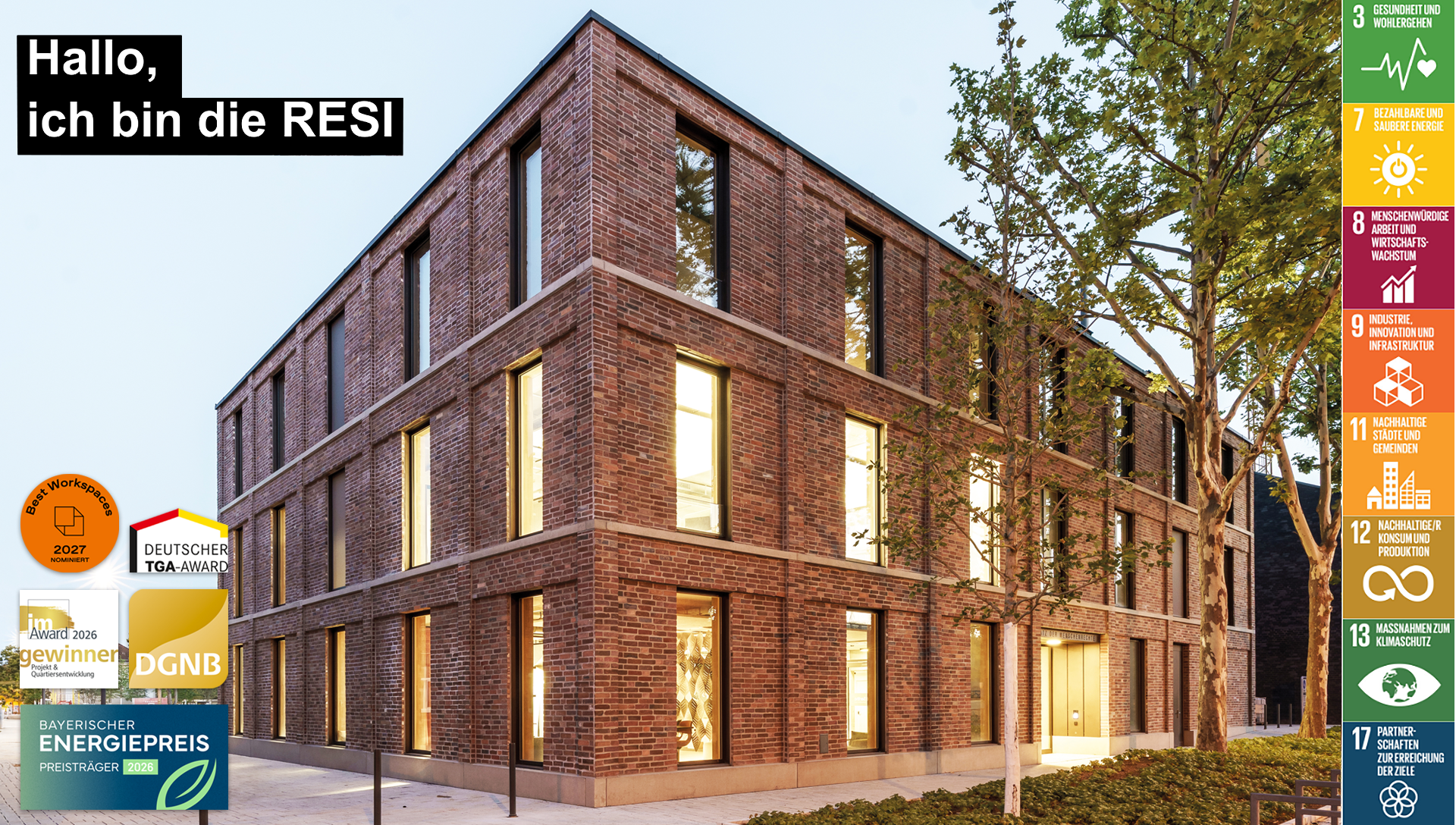
RESI: Netto-null, frugal, lowtech und jetzt auch GOLDEN
08.05.2026

RESI stands for Responsibility, Excellence, Sustainability, and Innovation – and for architecture that makes a statement. RESI is more than just a building – it is a catalyst for a new building culture.
Office buildings must be much more than just a place to work or produce. They are a place for exchange, well-being, creativity, community, innovation – and a place of responsibility. The new culture of building is a promise for the future. It means that we design and redesign buildings so they function today without compromising tomorrow.
Looking at the entire life cycle, buildings are responsible for 40% of our national CO2 emissions. That is why a new culture of building also means creating fossil-free, resource-efficient places to live and work – within the ecological limits of our planet.
A new culture of building is more than that – it is a commitment to the future. It stands for buildings that do not function at the expense of tomorrow, but rather carry forward values such as sustainability, identity, and community.
With RESI, we have poured our convictions into a building.
When designing RESI, we eliminated anything superfluous, making it a frugal building. For us, frugality means focusing on the essentials and leaving out the unnecessary. RESI is a project close to our hearts – we have optimized many aspects and placed great importance on smart, sustainable decisions. The result is a sustainable, economical, and inspiring place.
RESI embodies all of our consulting experience – and all of our courage. Here, we have implemented what we recommend every day in our large-scale projects. And we have gone even further: we have realized our vision without compromise, because it is our own project. We have pushed boundaries to demonstrate that it is possible.
Why? Because we want to inspire. Because we build bridges – within the industry, between people, ideas, and opportunities. RESI is living proof that extraordinary projects can become reality even with a limited budget.
An idea that becomes a vision is the most important first step. But what next? How to set up a project that has never been done before? How to define project goals and feasible ways to achieve them? And just as important: how to reduce the risks that venturing into the unknown naturally entails?
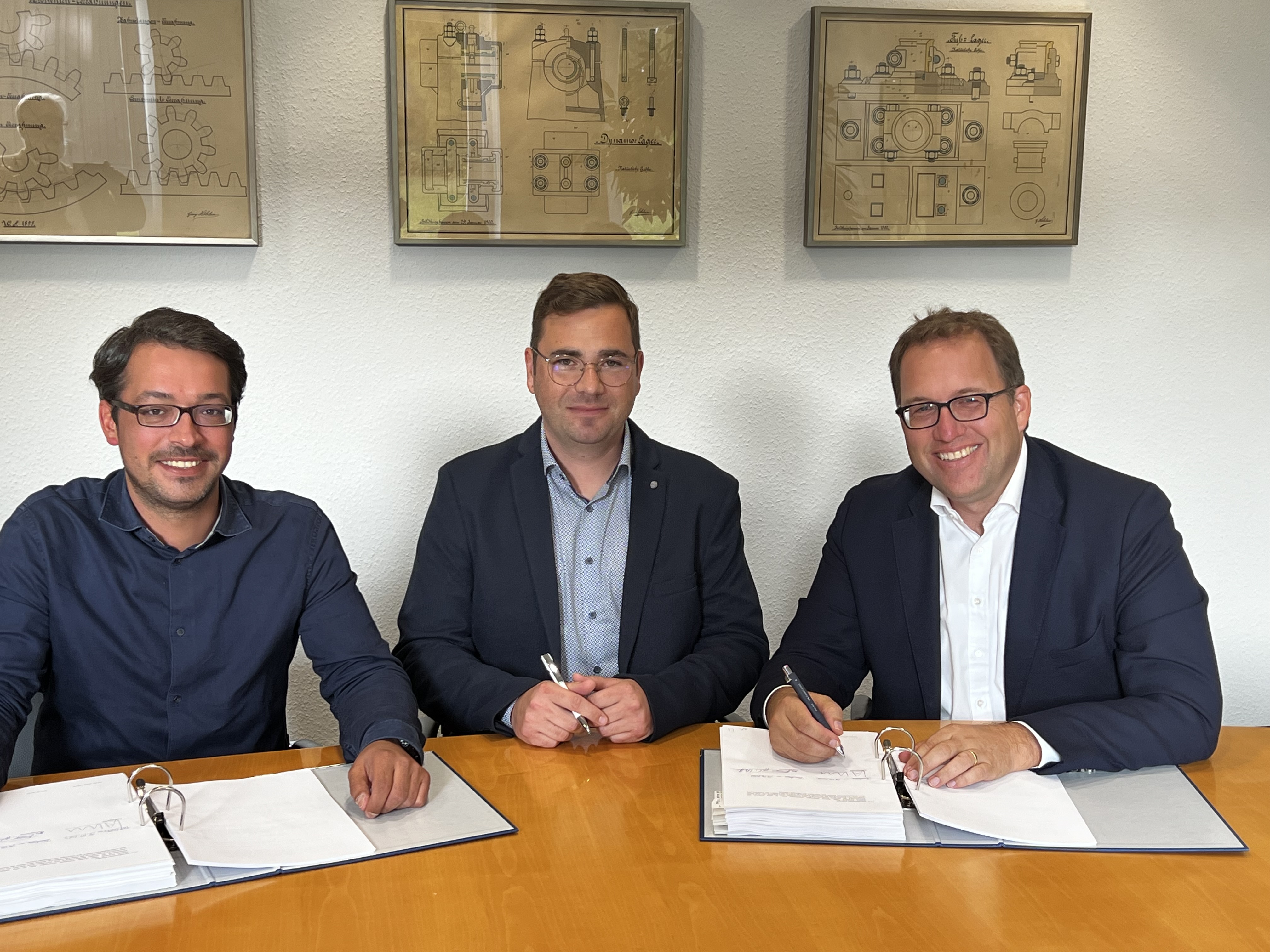
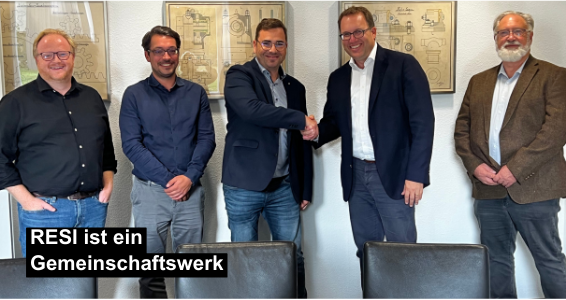
The solution was found in trustworthy partnerships, unusual contract models, and mutual transparency. An open and joint definition of the collaboration with our general contractor therefore proved to be fundamental. With the open-book approach, we were able to proceed transparently through the project and find the best possible balance between cost and quality. Decisions on savings were made participatively.
RESI stands for a building culture that takes responsibility. Sustainability does not begin with the outer appearance, but with every detail – from the choice of materials to the supply chain.
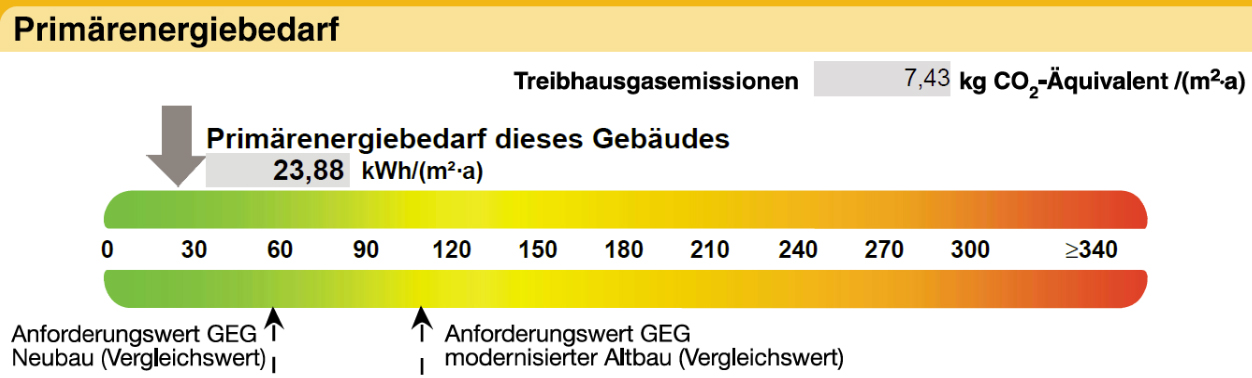
RESI achieves the EG40 energy efficiency rating. This means that the building requires only 40% of the primary energy of a standard building according to the Building Energy Act – a top rating for office buildings. While many new buildings are rated EG55, RESI meets the highest energy efficiency requirements.
Sustainability is not seen as an add-on here, but as the core of the concept – ecologically, economically, and socially.
RESI meets high ESG and taxonomy requirements and shows how buildings can be prepared for future climate risks – while ensuring user comfort.
RESI shows how sustainable buildings can be created when we value resources, rethink processes, and take responsibility at every step.
Will we have RESI certified? Yes, indeed. RESI is currently undergoing the DGNB certification process. Why? The certification criteria provided us with very helpful guidelines for sustainable construction. We used the DGNB as a quality assurance system and as a tool to manage complexity.
We kept our vision firmly in mind and consciously accepted formal point deductions. We had to choose between a green roof or a full-surface in-roof PV system. The almost self-sufficient energy supply was an essential part of the RESI concept that we did not want to do without. We were well aware that this decision would likely result in us receiving DGNB Gold instead of Platinum.
In the end, the certificate itself is a formality. But it secures us €180,000 in QNG funding. And it is a visible promise of quality for RESI.
RESI demonstrates how intelligent planning makes a difference. In order to achieve the goal of a net-zero building, many decisions had to be made during construction and for subsequent operation. Architectural and design decisions followed the guidelines of the energy concept in line with the motto ‘efficiency first’. Thermal simulations, daylight analyses and a clever energy and ventilation concept provided a sound basis – without the need for oversized technology. From the structure of the walls to the dimensions and placement of the windows to the functionality of the ventilation system, the principle of ‘form follows efficiency’ applied throughout.
RESI is a low-tech building, which means it has no traditional water-based heating system and no active cooling. Instead of complex technology, RESI relies on intelligent solutions:
To ensure that this works, we relied on precise planning and simulations: thermal analyses, daylight and shading simulations, and energy models determined the architecture and technology – from window sizes and room layout to the optimal storage mass. The result is a building that achieves more with less technology: net zero in operation and maximised user comfort.
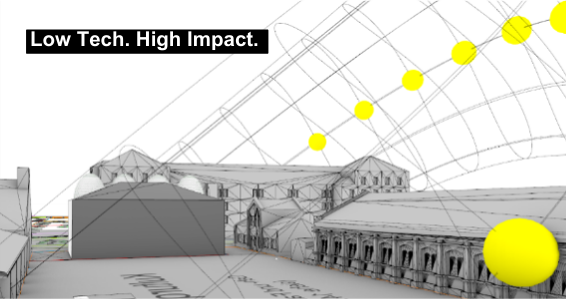
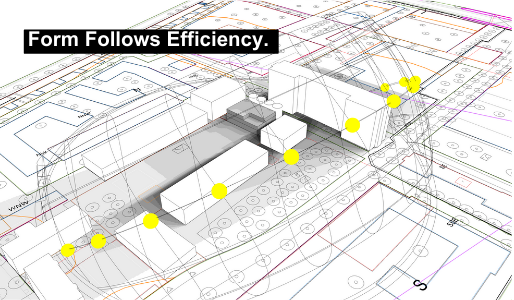
RESI is equipped for the future. User comfort remains high, while energy consumption and CO₂ emissions are drastically reduced. The life cycle assessment confirms that RESI is 20 % below the QNG requirement – a milestone for sustainable office buildings. In addition, the anticipated consequences of climate change were taken into account by developing a climate risk analysis and a climate protection roadmap.
RESI is a promise: for comfort, efficiency and sustainability from the very first moment. To ensure that this promise becomes reality, the launch is accompanied by a well-thought-out commissioning management process.
RESI relies on a centralized ventilation system and an intelligent shading system. But commissioning is a complex process: Operational optimisation is monitored continuously for 15 months. Why? Because the seasons, climatic influences and user requirements for this unique project cannot be coordinated on paper – fine-tuning needs to be harmonised in real-life operation.
Together with the Technical University of Nuremberg, we have set up a real-world laboratory to continuously monitor the operating parameters. The findings were directly incorporated into the optimisation of the systems – scientifically sound and practical. The first papers on system optimisation are already available.
The journey does not end with commissioning. Monitoring and further support by students – up to and including theses – are planned. This means that RESI not only remains smart, but is becoming even smarter.
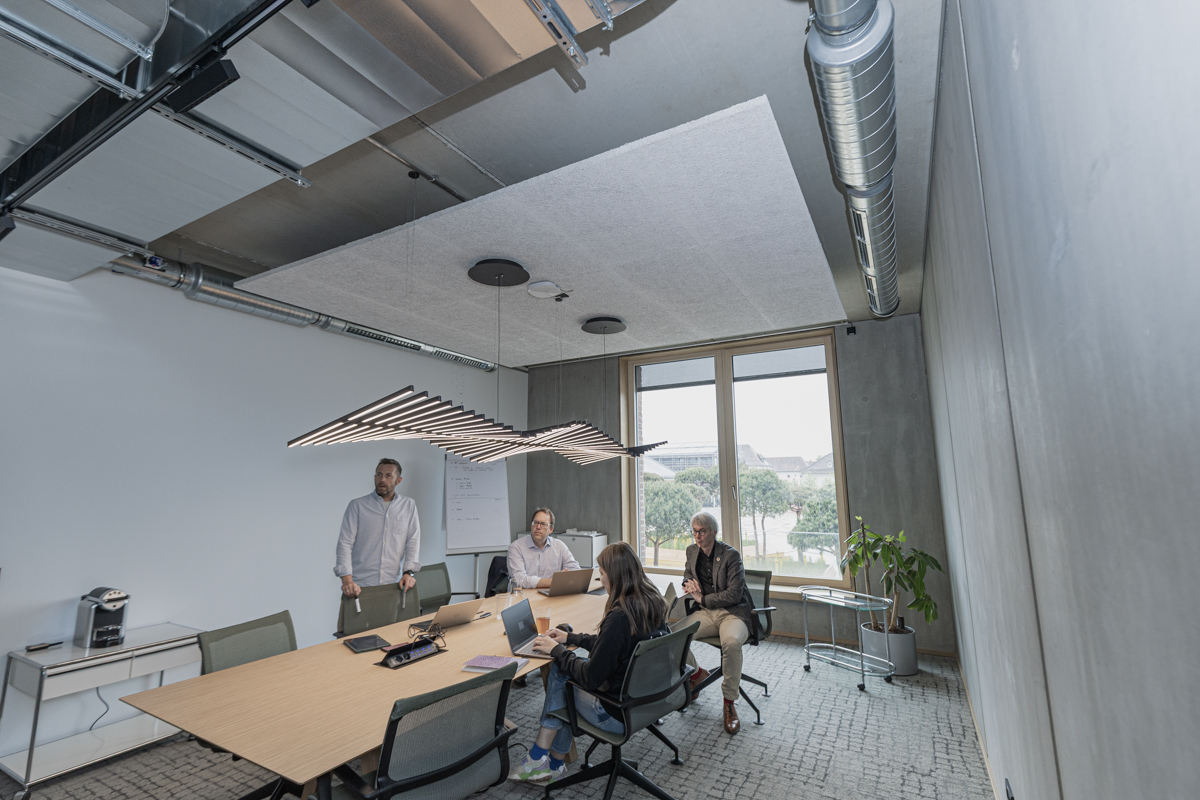
RESI stands for a new work culture. The design follows the New Work approach and the principle of activity-based working: different working environments give employees the freedom to choose the right space for each task – whether for concentrated work, creative exchange or team meetings.
Co-creation creates loyalty: employees were involved in the planning at an early stage in order to understand their needs and working methods. This participation strengthens their identification with the new workplace and ensures that RESI is not only functional but also personally relevant.
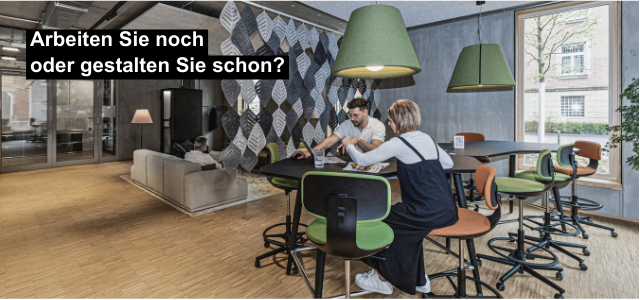
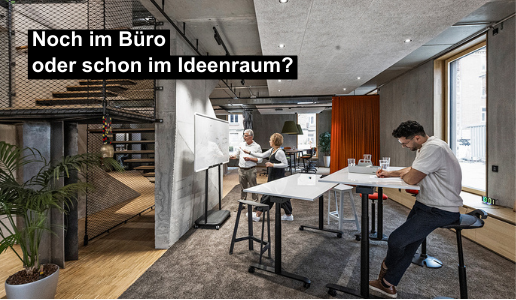
The choice of materials also follows the principle of sustainability: non-toxic fittings, regional furniture partners and short supply chains ensure healthy rooms and ecological responsibility.
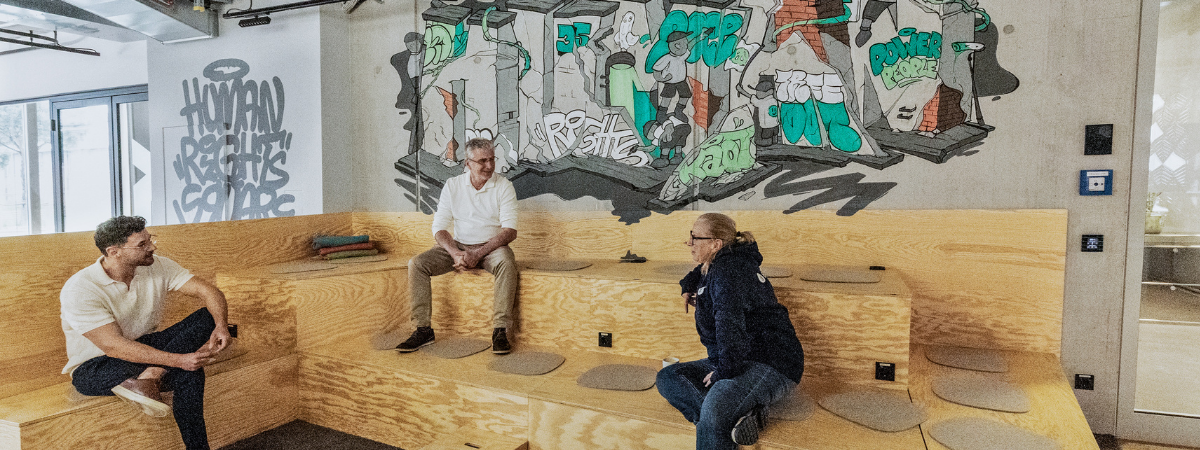
It would be a mistake to think that a frugal, low-tech building can do without intelligence. All essential functions are controlled intelligently to ensure comfort at all times.
That is why RESI has a sophisticated sensor and measurement data acquisition system. Based on the collected information and combined with data from the weather station and sun position reports, sun protection, ventilation and air exchange are controlled automatically.
Weather forecasts for the coming days are taken into account when setting the weather-controlled ventilation system. The system is adjusted according to the expected temperatures.
Intelligent control of PV power usage and the battery system ensures the highest possible contribution margin for own use. Accordingly, during the winter months, surplus electricity is used for night-time heating to prevent the building from cooling down. The perfect interaction of the technology is optimised by our commissioning management over a total of 15 months.
The open working concept is supported by flawless Wi-Fi reception throughout the building. This was preceded by a thorough connectivity analysis, which enabled a tailor-made technical concept to be created.
Now you might ask: What kind of facility management concept could a building measuring just 2,000 m² possibly need? The answer: there are a number of things to consider when breaking new ground.
We provided comprehensive advice on facility management issues right from the early planning phase. The aim was to optimise the design of the spaces and the selection of components and structures so that they would be particularly easy to clean and maintain. This forward-looking approach enabled us to increase long-term operational efficiency and significantly reduce cleaning and maintenance costs.
In parallel with the planning, a detailed calculation of the future operating costs of RESI was carried out. This analysis enabled us to identify optimisation potential at an early stage and incorporate it into the planning. The results formed the basis for the gross rent concept implemented for our co-users within RESI, which ensures a transparent and reliable cost structure for all parties involved.
During ongoing operation, the biggest challenge is the ventilation system, which continuously adapts to the operating parameters – thanks to monitoring and optimisation. This requires partners who remain flexible and accompany the process over a period of 15 months. So that RESI not only functions, but also continues to develop.
RESI is our passion project, our testing ground for exploring and developing sustainable and economical solutions for small and medium-sized enterprises.
Due to its unconventional approach, many decisions had to be weighed up individually, priorities had to be set and unusual solutions had to be found. In the category ‘New Construction – Innovative Concept’, RESI received the German TGA Award from the magazine ‘Moderne Gebäudetechnik’ (Modern Building Technology) – as well as the German Real Estate Manager Award (imAward) in the category ‘Project and Neighbourhood Development’. We deliberately chose transparency so that others could also realise their vision and benefit from the insights gained through RESI.
That is why we are even more delighted when our RESI motivates others to follow their own individual path to sustainability!
Well thought-out ideas instead of excessive technology: instead of oversized systems, an intelligent energy design was developed. The building does not require conventional heating and cooling thanks to thermal simulations, clever ventilation with heat recovery and passive systems such as night ventilation and sun protection. In addition, there are sharing concepts for rooms and workplaces as well as self-generated electricity from the building's own in-roof PV system. The result: maximum comfort with minimum energy consumption.
RESI focuses on the essentials and, for example, doesn't need any heating or cooling. Instead, it has a smart ventilation system that saves a lot of energy, money and CO2.
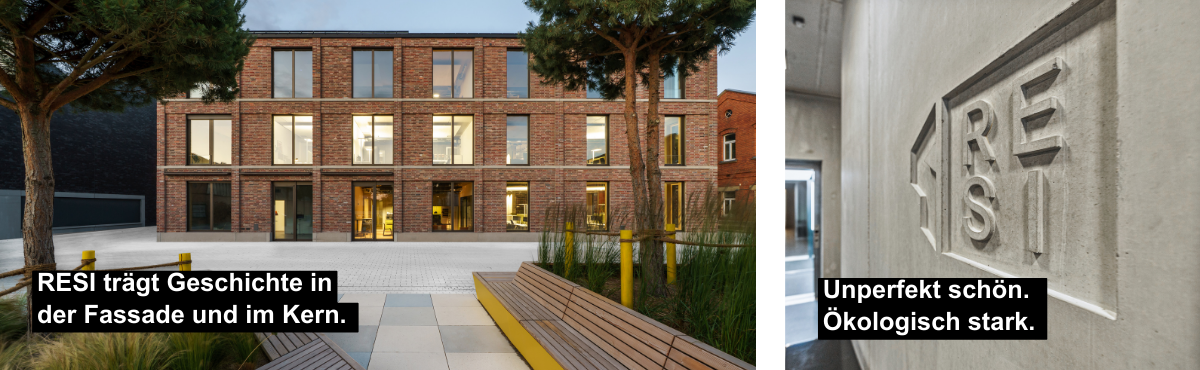
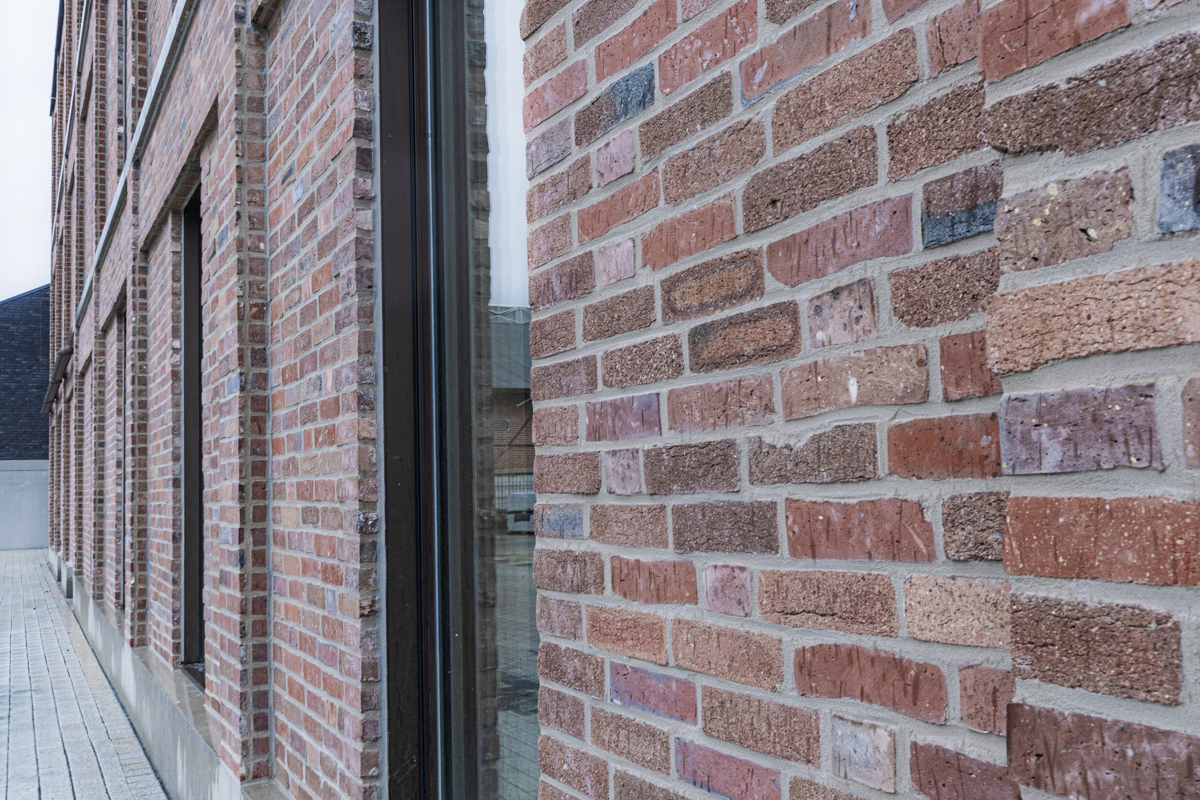
RESI is a model for circular construction with 75 % recycled content: recycled concrete, upcycled bricks, regional supply chains and non-toxic materials. The planning is based on climate risk analyses and a climate protection roadmap. The building achieves net zero in operation and meets the highest ESG and taxonomy standards. RESI shows how buildings can be designed to be climate-resilient, resource-efficient and future-proof.
Sustainability pays off: with a construction price of €2,326 per square metre of gross floor area, RESI is around 17 % below the average standard (BKI) for office buildings in Germany. This was made possible by deliberately avoiding unnecessary technology, resource-saving planning and a well-thought-out overall concept. Breaking new ground requires good partnerships that enable you to think outside the box together. For example, we took the plunge together with the general contractor and found sustainable and affordable solutions as part of an overall pricing concept.


Your personal contact for indivdual consultancy services tailored specifically to your needs!
Do you already receive our newsletter?
 Newsletter
LinkedIn
YouTube
Newsletter
LinkedIn
YouTube